Leaves of Fox

Musings on Leaf’s interests including furry art, engineering, music, and other things.

  • The Process

    I’ve been asked for art advice often enough that I began to wonder how to share some. The response quickly grew too large for a blog post so I narrowed focus. Most questions have been about building skills. “How do I learn to draw?” or “How can I get better?” are important for folks who want to progress in their art. But I’m writing about something rarely asked about, and I think it’s more important: the artistic process.

    Your process is how you make art. It’s your planning, practice, media, environment, maybe even favorite snacks. Remember the scientific method? It’s the foundation of science and underpins our understanding of the physical world. For better or worse, art doesn’t have a standard process like that. The only rule is that you make art with it.1 A good process can make the difference between a lifetime of creativity and burning out in frustration.

    I don’t claim to have the best skills, but I’m a thoughtful artist with unique sensibilities. One who makes meaningful connections with their audience. One who’s been active for more than three decades and still loves it. My process helped me do this, and I hope you’ll find something of value in it.
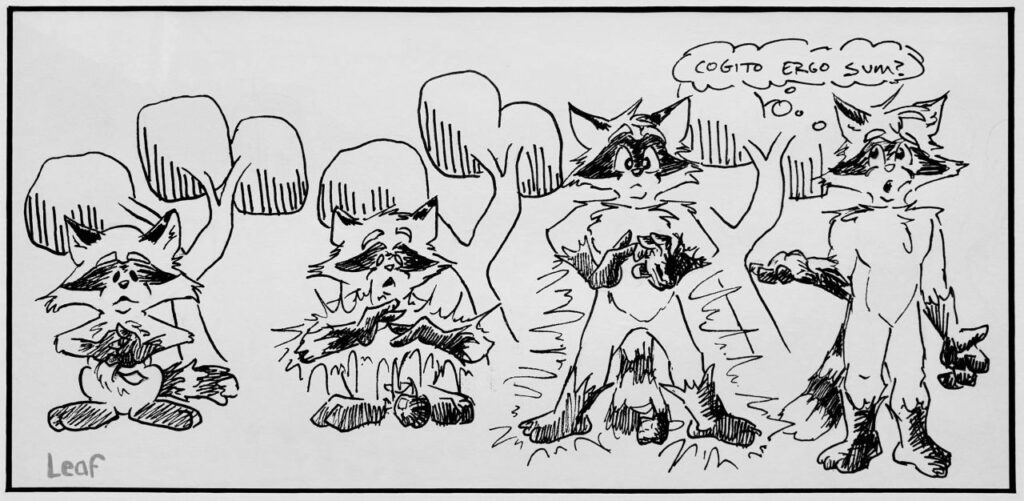
    Sequential art. A small feral (non-anthropomorphic) raccoon holds an apple, presumably biting it. He drops the apple as his arms transform into anthro arms, then the rest of his body transforms. In the final panel he is standing and thinking, "Cogito Ergo Sum", or I think, therefore I am (René Descartes).
    “Raccoon ponders the nature of existence”, circa 1997.
    I’ve been thinking about process for a long time.

    Leaf’s Creative Process

    It feels funny to write about art from a position of experience because I still feel like a wide-eyed kid marveling at the godlike power of his favorite artists. A sense of naivety is part of my process; I want to be astonished. Zen Buddhism teaches a concept called shoshin, or Beginner’s Mind. “In the beginner’s mind there are many possibilities, but in the expert’s mind there are few.”2 So I step outside my comfort zone regularly and I try not to let experience control me.

    Ideas

    A hearty appreciation of cartoons started me drawing in my teens. I browse art online a lot. It isn’t just fun, it’s full of fresh ideas and it fires me up to create. To the wonderful community of artists out there, especially furries: Y’all are my muse, so thank you!

    Each piece begins with an idea, and it often comes out of the blue. I’m usually busy when it strikes but I can write it down. Adding a quick sketch is great when the concept has specific visual elements. If I’m lucky I might be able to whip out a drawing the spot. It’s exciting to let the pencil fly on a fresh idea.

    My friends and art mutuals are inspirations that never run dry. Last season I drew 71 original drawings in holiday cards. It was a most excellent exercise in idea generation and rapid execution. Thinking about friends prompted ideas outside of what I’d normally consider, and making surprise art is relaxing because there are no expectations.
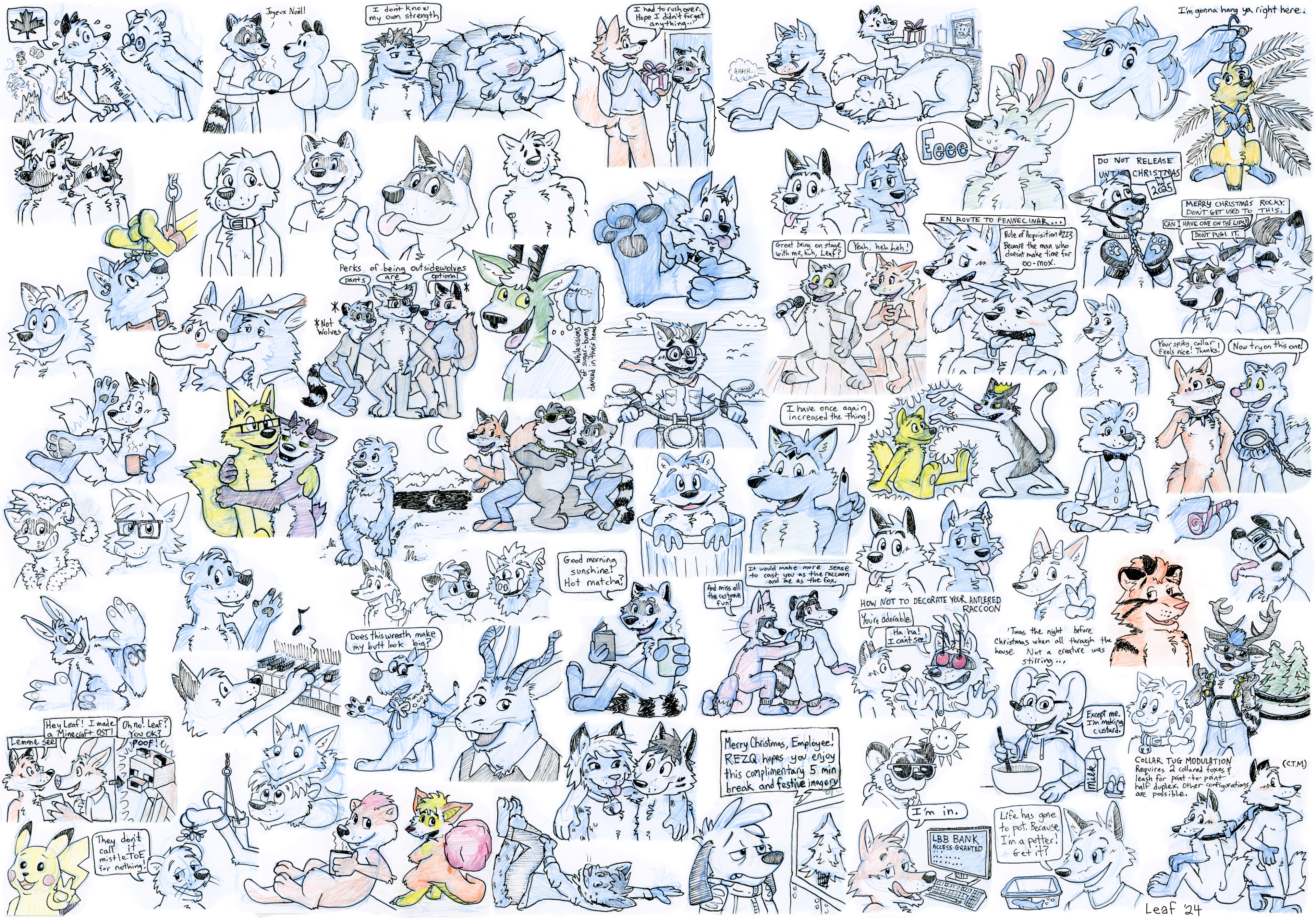
    A small section of a larger set of inked drawings that were sent as holiday cards. Some are colored. The drawings are of various characters and scenes depending on the recipient of the card.
    A few of the holiday card drawings from 2024.

    Realization

    Starting is the hardest part. It’s not easy to dedicate time to art in a world of interesting activities. My inner Art Dude drums up excitement and incentives, hoping I’ll give him some time. “It’ll look so cool! Folks will love it!” It also helps a lot if your process is fun, so he reminds me, “You enjoyed it last time, do it again!” Fine, you win. I’ll draw now.
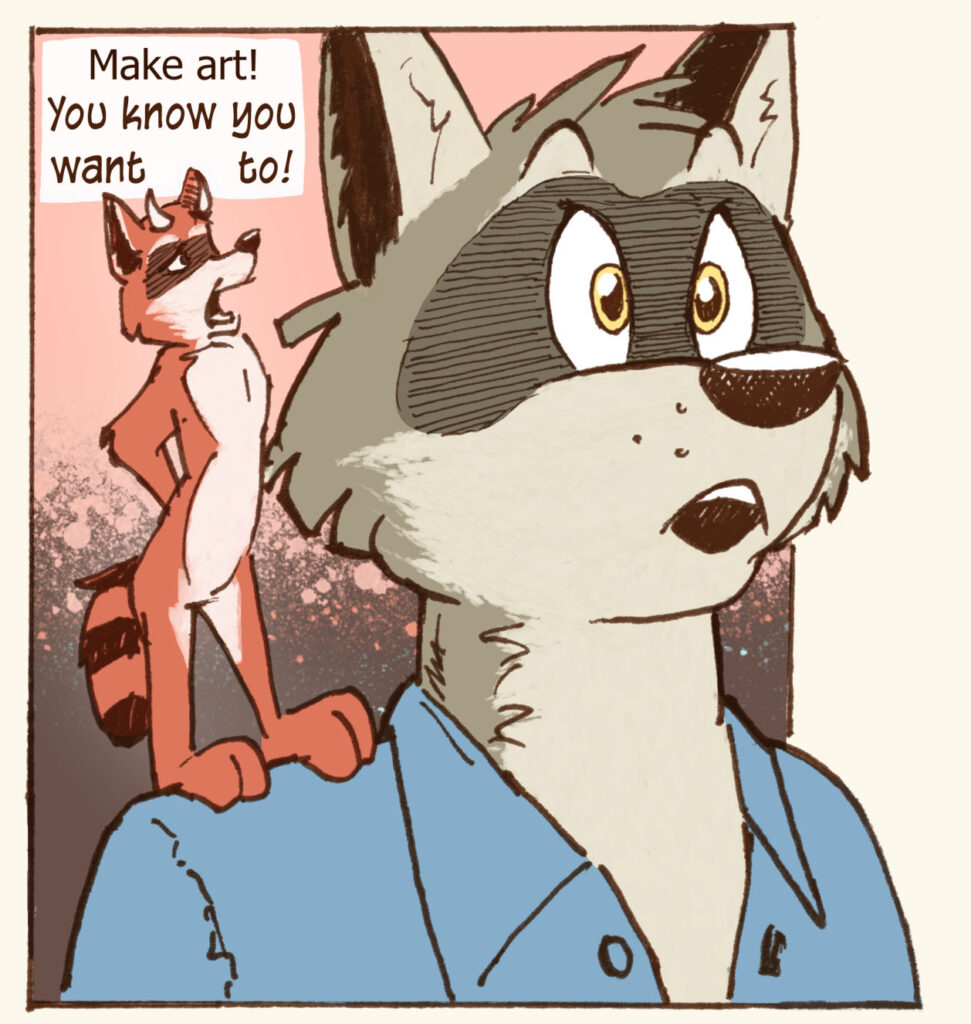
    A raccoon in a blue collared shirt with a little imaginary guy on his shoulder. The imaginary guy whispers into  "Make art! You know you want to!"
    Art Dude wins this time.

    I almost always start with a pencil. Drawing on paper feels cozy. It makes me draw more carefully which may improve the art. Original art feels special so the stakes are higher. Sometimes pencil and paper is all I plan to do, like in the drawings below.
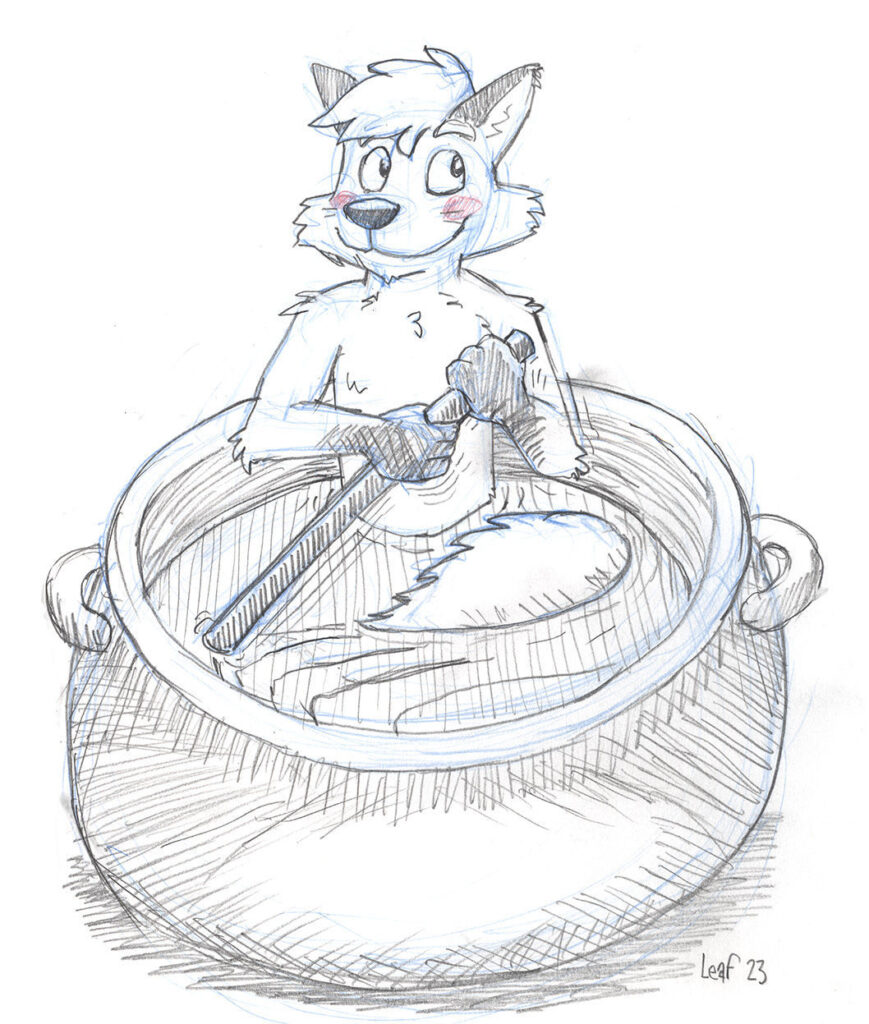
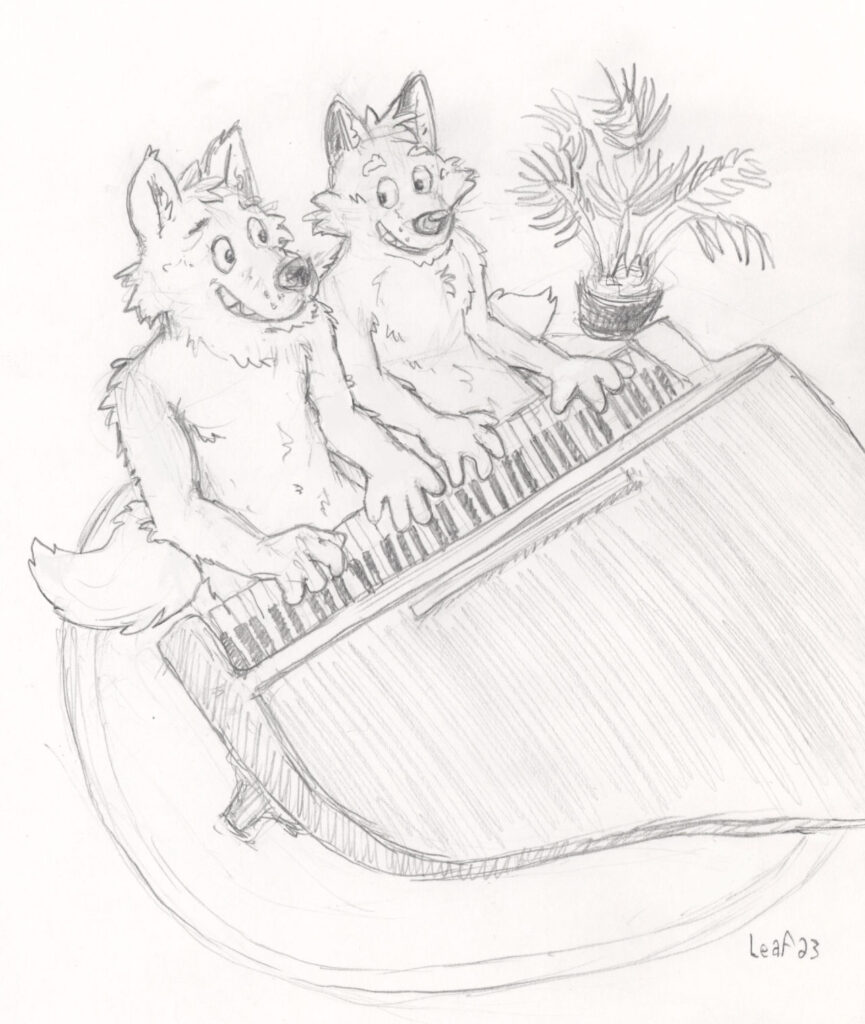
    Digital is great, too. I love using Clip Studio Paint on an iPad but any tools will work. A digital flow is great for experimenting. Transforming and moving selections are super useful. It’s hard to think of downsides to digital except that it’s tempting to abuse “undo”, which can slow me down.

    I’ll rough out the composition with light strokes to make sure elements fit, then sketch in earnest. For inked pieces I’ll use blue pencil, it only needs to guide the inking. For color pieces, value-based shading and other details to be shown with color can be omitted from the sketch.

    I’m learning to appreciate that sometimes a very simple sketch does the job. I feel it in my gut when a sketch has that kind of energy. There’s no need to overwork a piece like that.
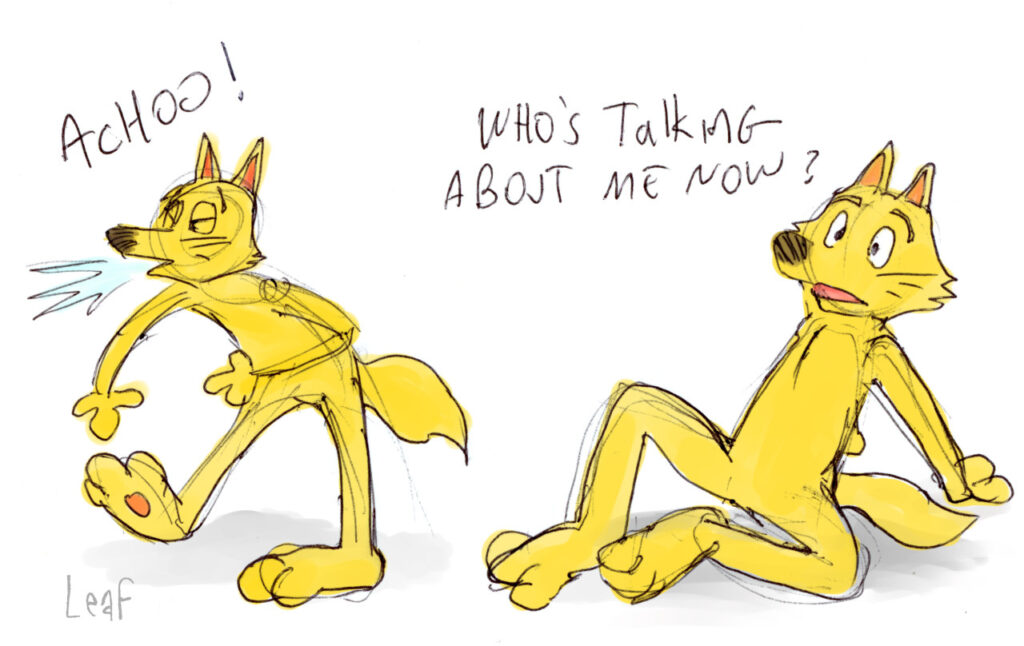
    A yellow fox sneezes, "ACHOO!" Then, reclining, he says, "Who's talking about me now?" It's a common sort of superstition in some parts of Asia .
    Hello Zorori! You’re cute like that, there’s no need to “finish” you!

    I used to ink most of my pieces but I rarely do it now. I get annoyingly obsessed with perfect lines, and if the pencil drawing is good then I’m scared to ink it because a mediocre ink job might ruin its energy. These hang-ups are all in my head. It’s probably just a phase and I might love inking again later. Lots of artists go through phases of preferring certain subjects or techniques, it’s fine! I’ll still ink pieces if that’s the look I am going for, like this ink & marker piece I sold at the Anthrocon art show this year.3
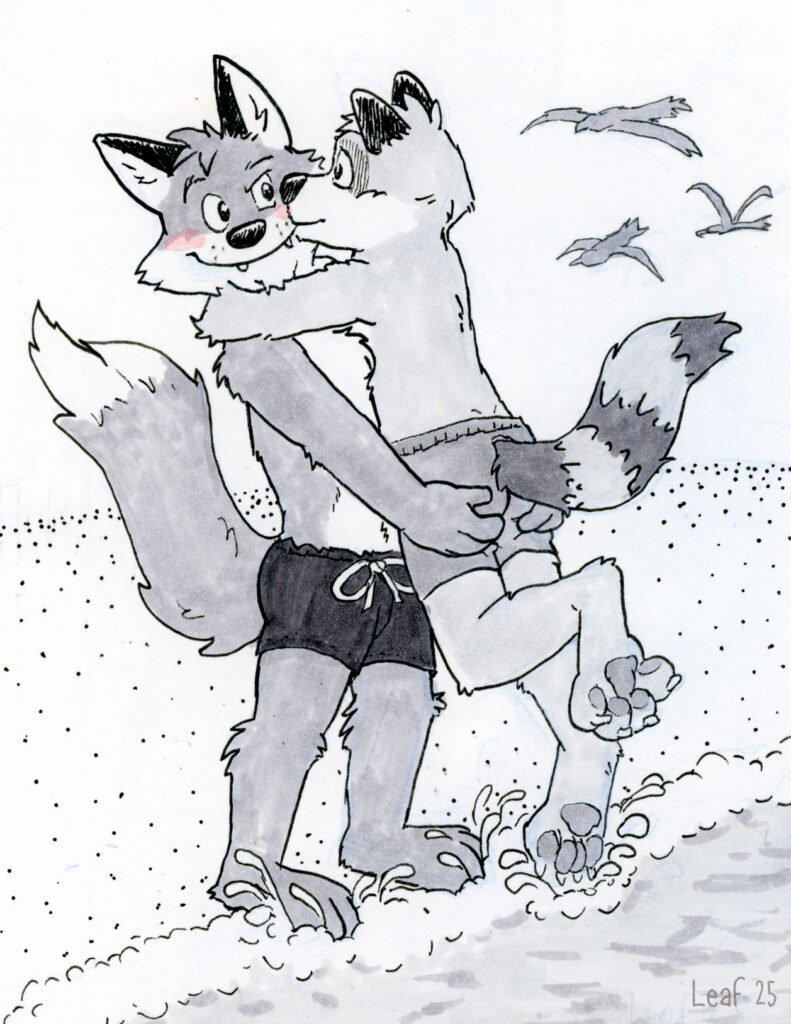
    Colin the fox and Aiden the raccoon at the ocean shoreline. Aiden jumps into Colin's arms to give him a kiss on the cheek. Colin supports Aiden, holding him by the rear. A gentle ocean wave laps at their toes. Colin's blushing a little.
    “Pick Me Up!” is one of three ink & marker pieces sold at Anthrocon 2025.

    Color gives the artist new power to set moods and to make figures pop. I’m not fast so I only color a few of my sketches, preferring to make more sketches instead. I might decide to color a sketch later—I waited almost five years on this one. The sketch itself was sparse but with color I could paint a warm environment for the figures.
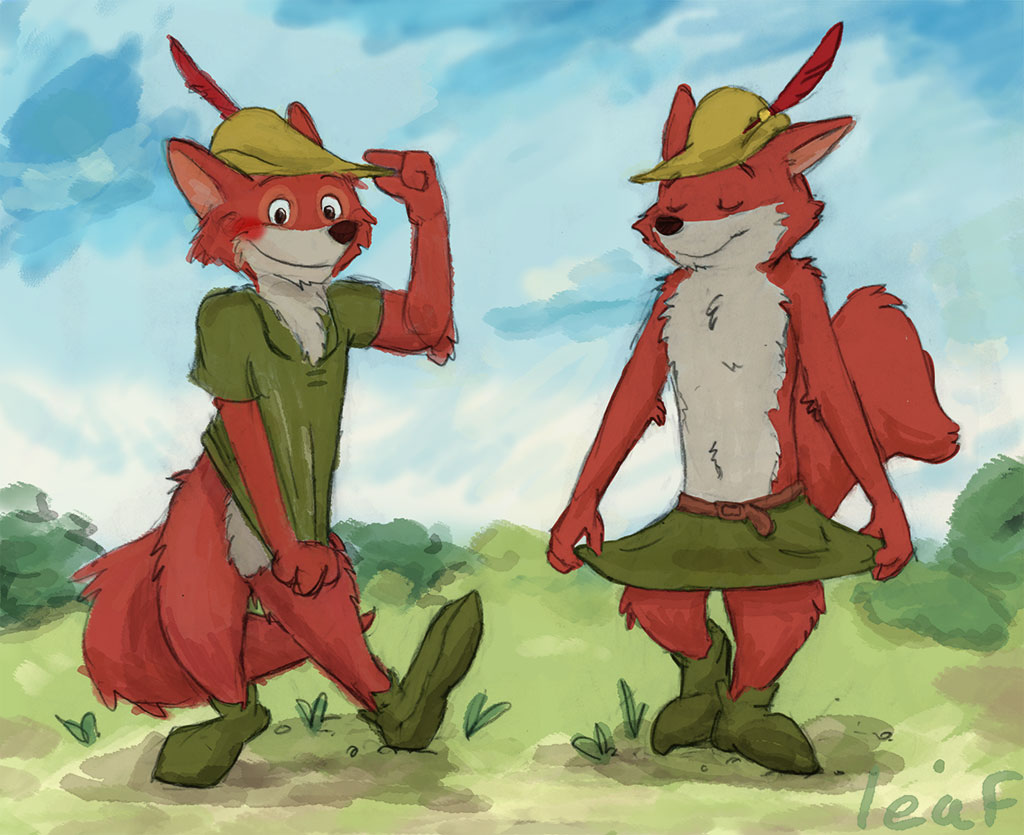
    Robin Hood, the foxy star of the 1973 Disney animated feature, is showing how his green tunic is really a two-piece. First pose he's sporting only the shirt, pulling it down to cover himself since his bottom half is bare. Second pose, he's wearing only the bottom part, which looks like a skirt as he performs a demure curtsy.
    Surprise! Robin Hood’s tunic is a two-piece.

    My style favors line over painterliness so I mostly pick colors and stay inside the lines. I might add shadows, highlights, or atmospheric effects. I like to color directly over the rough pencil lines4 because the finished work feels more loose and vibrant. I like a little wabi-sabi in my cartoons.
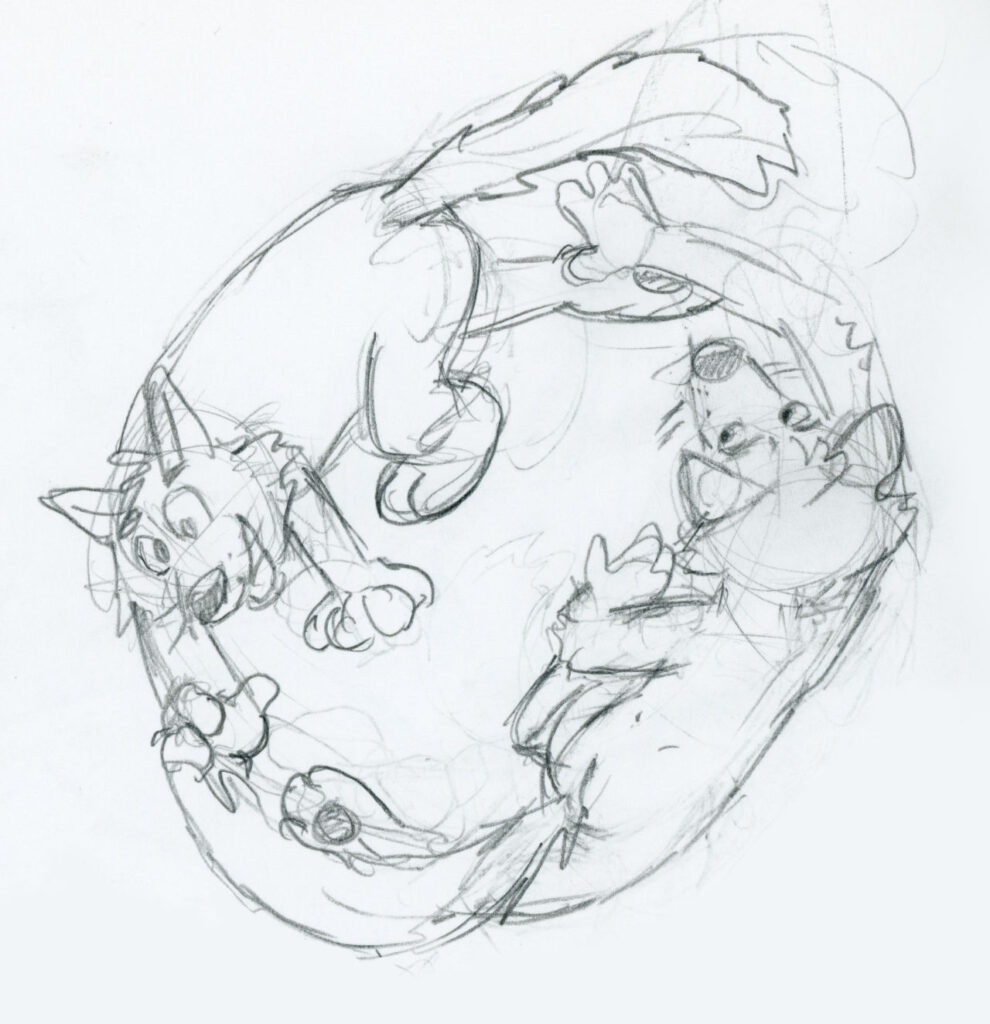
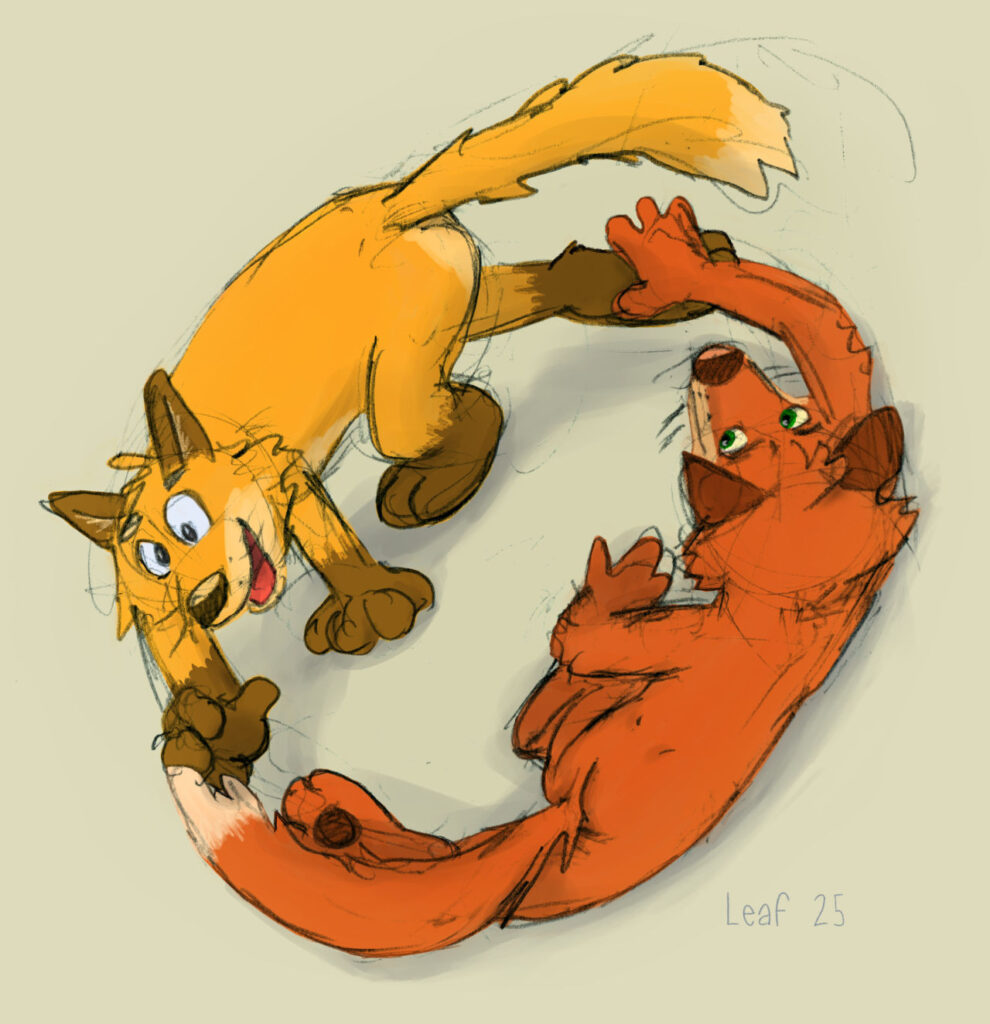
    There’s an art to knowing when to stop. If I’m lucky, the piece just feels done. I look for an exit strategy when effort yields diminishing returns, or I may seek a second opinion if I’m unsure. The bar scene below has the most detailed environment I’ve drawn so far. I futzed with it for a long time but eventually I had to decide that it was done. Done is beautiful!
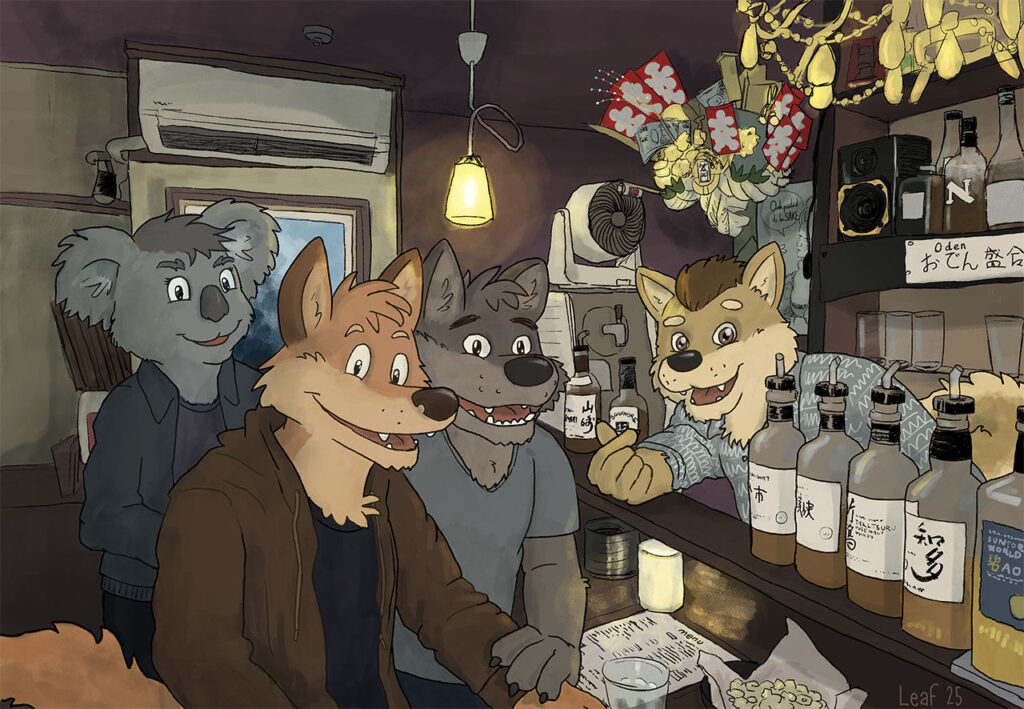
    4 figures in a Japanese bar scene: koala, fox, wolf, and shiba inu dog. Bottles and knickknacks abound the small bar.
    Jun’s Bar, an intimate hole-in-the-wall in Shinjuku Golden Gai.

    Motivation

    Motivation is something every artist contends with. Sharing my work is part of my process because the interaction is important.5 An appreciative audience sends me to cloud nine. Feeling like a valued part of a creative community is why I’m here. If we understand why we create then we can craft an encouraging process. I’m driven to create the things that I want to see in the world; my best motivations come from within. Money is a poor motivator for me. Accepting payment creates an obligation, which feels bad and stifles my creativity. I can occasionally produce art on demand but doing it too much drains me. Don’t abuse the muse!

    That’s my process in a nutshell. If you were hoping I’d write about making webcomics, here is a presentation I gave about Raccoony in 2024. In it I talk about my webcomic creation process and other topics.

    Suggestions

    My process works because it fits my personality and motivations. I feel good as I learn and make things. Your process is your relationship with your art, so it will be different. Consider these suggestions as you create.

    A good process balances structure with exploration. Structure lets you leverage past experience. You apply what you’ve learned in familiar ways. It’s comforting, but too much structure slows growth. If you’re rarely surprised, consider stepping out of your comfort zone. No risk, no reward!

    A healthy process is sustainable. It should reward you with something that makes the effort worthwhile, and it needs to keep you interested. An affirming process can be a virtuous cycle, making you feel better the more you do it.

    Don’t worry too much about results. We’ll make some good pieces and some bad ones. Instead, embrace your artistic process. Learn and grow with it, but above all, enjoy it. Because it’s not the destination, it’s the journey.

    1. Art is an expression of human skill and creativity. Using Generative AI removes skill from the process and is ethically questionable. Support human artists! ↩︎
    2. Suzuki, Shunryū (1970). Zen mind, beginner’s mind ↩︎
    3. My first art show! Better late than never! ↩︎
    4. When working digitally, I color under the line art, not over it. The line art sits above the color so it remains fully visible. This is accomplished with layers and blending modes. ↩︎
    5. If you see something you really like, don’t be afraid to let the artist know! Most love affirming comments. ↩︎
  • The Set-Up

    Ideas abounded when I started this blog. I was looking forward to writing. I’d put a lot of time into setting up the website, but months after it was working I’d yet to write one substantive thing. I’d been on sabbatical so time wasn’t the issue; the motivation to blog had just melted away. I’ve been through similar cycles with other hobbies like retro computing so I’m not too surprised. Sometimes I love the setup more than the practice.

    I love setting up things! One learns so much and it feels satisfying to make them work. But actually using them isn’t always as appealing as expected. In my blog’s case, I hadn’t given it a chance. Given my love for setting things up, it seemed fitting to write about setting up the blog. This isn’t a how-to guide, it’s more of a “thrilling” tale of my adventures in webops.

    If one wants a blog in a jiffy there are platforms that will host you without hassle, possibly for a fee. It’s probably the best choice for most people, especially for the non-technical. But I’ve always preferred to run my own my web stuff. There are practical reasons but it’s mostly because making Linux do neat things sends me to my happy place.

    I had to nail down two variables before actually doing anything: a networked computer and a blog platform. Once upon a time in the early web days, I’d run raccoony.com on a cute Linux box in my garage. Sadly, I experienced more than my share of hardware failures and it’s soured my appetite to try this again. My career is designing computer hardware, but sometimes the gadgets don’t like me.

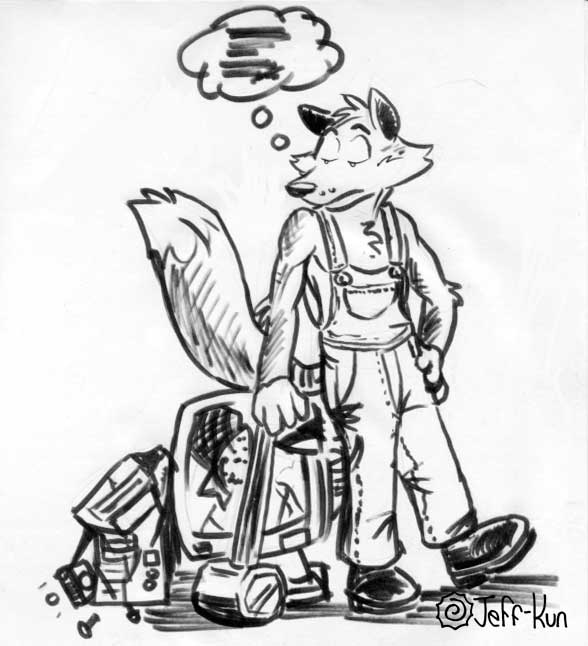
    A fox in overalls rests against a sledge hammer and a pile of smashed computer hardware.
    The server is down again…1

    Cloud computing presents a compelling alternative to running one’s own server hardware. Renting an instance on a cloud computing platform is super cheap and I’ll never have to deal with another corrupted disk array, busted RAID controller, dead disk, buggy PC card, or flaky internet connection. Even soft errors will be reduced!2 The cloud infrastructure is inherently networked and it can handle backups and other administrative tasks, too. I could stick the blog on the same AWS Linux instance that hosts my webcomic (raccoony.com) so there’s no additional cost for cloud computing services.

    As for a blogging platform, there are several viable choices. WordPress seemed like the best option due to its huge user base and reputation for a simple install process. Installing it was mostly easy, but it needs a working web server and database service, this article helped me out here. Once it was set up you can login to the blog’s admin panel to configure and start using it.

    Before going live, I had to complete a serious side quest: mitigating security vulnerabilities. It’s no surprise that WordPress, the most popular blogging platform, is also the most attacked. There are guides to hardening both WordPress and webservers in general so I read up on what I could. I settled on simple, reasonable precautions like making the admin panel accessible only from my IP, and only when I want to use it. This isn’t overkill; hackers exist and they can do bad things. If you run a website, you can check your webserver logs where you’ll see tons of bots, mostly from foreign countries, trying to connect to popular hacking vectors like the WordPress login portal. It’s safest if these special doors simply don’t exist to the general public. One must also protect their domain registrar and cloud computing accounts with multifactor authentication. It’s a jungle out there.

    In retrospect the setup process seems easier than it actually was. Things often seem easier in hindsight but there were a few difficult areas that stood out. Managing the SSL/TLS certificates that enable modern web security was the biggest hiccup. A manual certificate installation process is annoying and error-prone. Even automated management with tools like certbot and letsencrypt isn’t without glitches, but this is really the way to go since the powers that be dictate that the maximum validity period for certificates will go down to only 47 days by 2029. No matter which way you manage your certificates, the webserver configuration is super finicky, or so it appears to a casual user like me.

    Another thing that took longer than it should’ve was picking a domain name. Finding a name that’s cool, memorable, apt, and available was tough, lol. That’s what I got, foxes.lol.

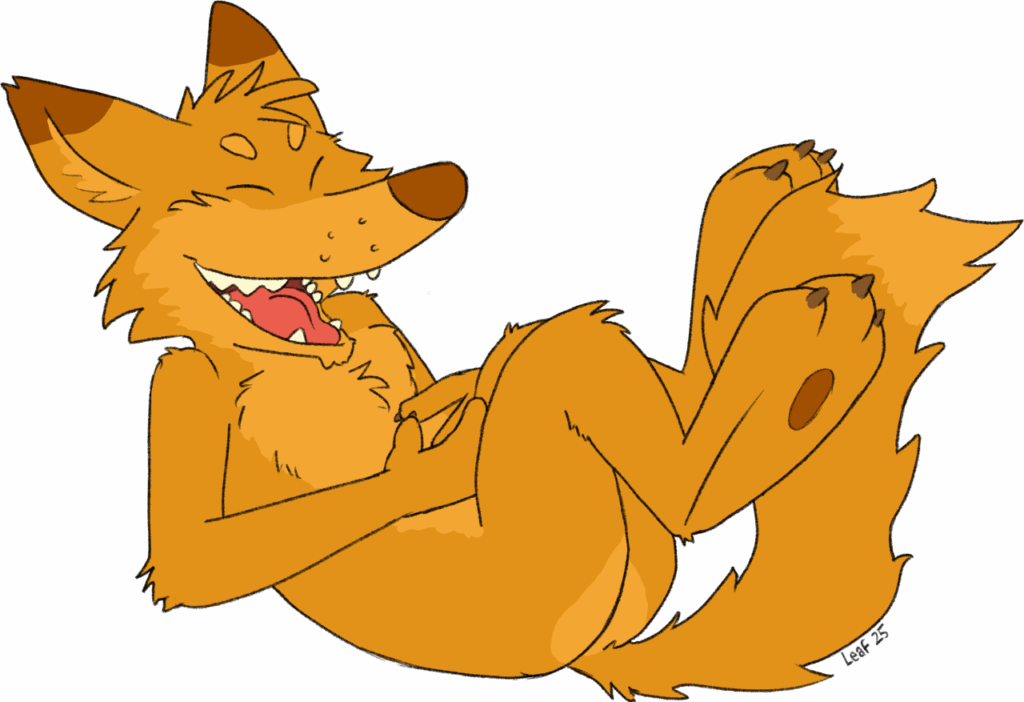
    A fox laughing in a ROFL-type pose

    And here we are, my first real blog entry is posted. Thanks for reading! Blog setup may not be the most exciting topic but I needed to start somewhere and starting really is the hardest part. It was also a good excuse to draw my ‘sona (Leaf) LOLing. Next time I’ll write about something completely different. 🙂

    1. Some of my old art is signed as “Jeff-kun”, my old otter fursona from the early 2000s. Before that I had a raccoon fursona in the 90s. ↩︎
    2. Anecdotal evidence leads me to believe that my mountaintop environment experiences more disruptive high-energy particles than a typical data center. Increased soft error rate (SER) is a well-known effect at high altitude but the presence of naturally-occurring radioactive isotopes may also exacerbate it. These compounds are common in granite mountains like the Sierra Nevada. ↩︎

  • Brand Spankin’ New Furry Blog

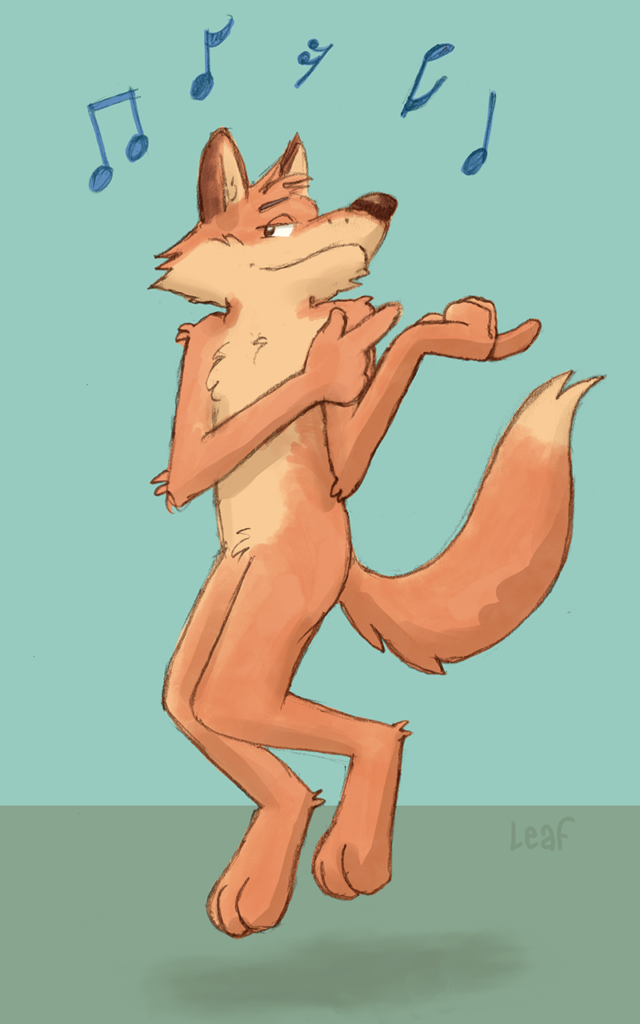
    Fox dude dancing to music, hopping in the air

    Hello, my name is Leaf! This is the first blog entry so let me introduce myself with the 5 Ws and H.

    Who: I’m Leaf Dubois, a furry artist and chip design engineer who’s been part of the furry fandom since the 90s. A while back I created a formative gay furry webcomic called Raccoony. I’ve also an engineer working in chip design. My fursona is an orange fox.

    What: I’m going to write about things I think are cool. I like creating stuff. I love art, the outdoors, playing piano, and lots more. I’ll probably be writing with a furry angle.

    When: There’s no update schedule. I’ll post entries as time and inspiration permit.

    Where: Leaf lives in a cozy cottage in the Sierra Nevada mountains with his wolf husband. 🦊🧡🐺

    Why: As we continue to slide towards fascism, we can’t trust media platforms to facilitate us. We’ve seen Twitter become a Nazi bar, Tumblr ban adult content, and Patreon cracking down on kinks. It’s not looking good out there. 

    So I built my own little platform. In 2002 I created and hosted a website to distribute my webcomic Raccoony. No webcomic platform or advertiser would touch it because it’s gay and NSFW. The website worked out great and this blog is another effort in the same vein. And I’d like to practice writing. Can I be interesting? Dunno, let’s find out!

    How: I made a Linux cloud instance and set it up as a webserver, installed WordPress, et voilà. The setup was actually kinda technical and time-consuming. I like being able to control the server directly but I wouldn’t recommend this unless you have some experience with Linux and networking. [Edit: This post goes into more detail.]

    Thank you for visiting. I hope to share interesting things with you in the coming years. Hope you find tranquility in these difficult times.